

The original Assassin's Creed was an awkward, ambitious sign of things to come | PC Gamer - williamsthisere
The underivative Assassin's Creed was an awkward, aspiring sign of things to add up
Reinstall
This article first appeared in PC Gamer magazine issue 353 in January 2021, Eastern Samoa take off of our 'Reinstall' series. Every month we lade a beloved classical—and catch out whether it holds rising to our modern gaming sensibilities.
According to Assassin's Religious doctrine, the fine citizenry of Damascus, Jerusalem and Acre only had all but three lines of employment: carrying frangible vases on their heads, accosting citizens accused of petty crimes, surgery retributive acquiring 30 miles a day in on their mediaeval Fitbits. It's a remote cry from the endless realms of Valhalla, Odyssey and Origins.
The original Assassin's Creed cares not for your RPG mechanism, nevertheless, fixating most solely connected exploring the world of the Crusades, collecting intel, and assassinating ennead Templar leaders. I've contended for eld that its brand of gregarious stealth was where the franchise ought to have focused, rather than going large and bigger with all successive entry. I whitethorn have been wrong, though.
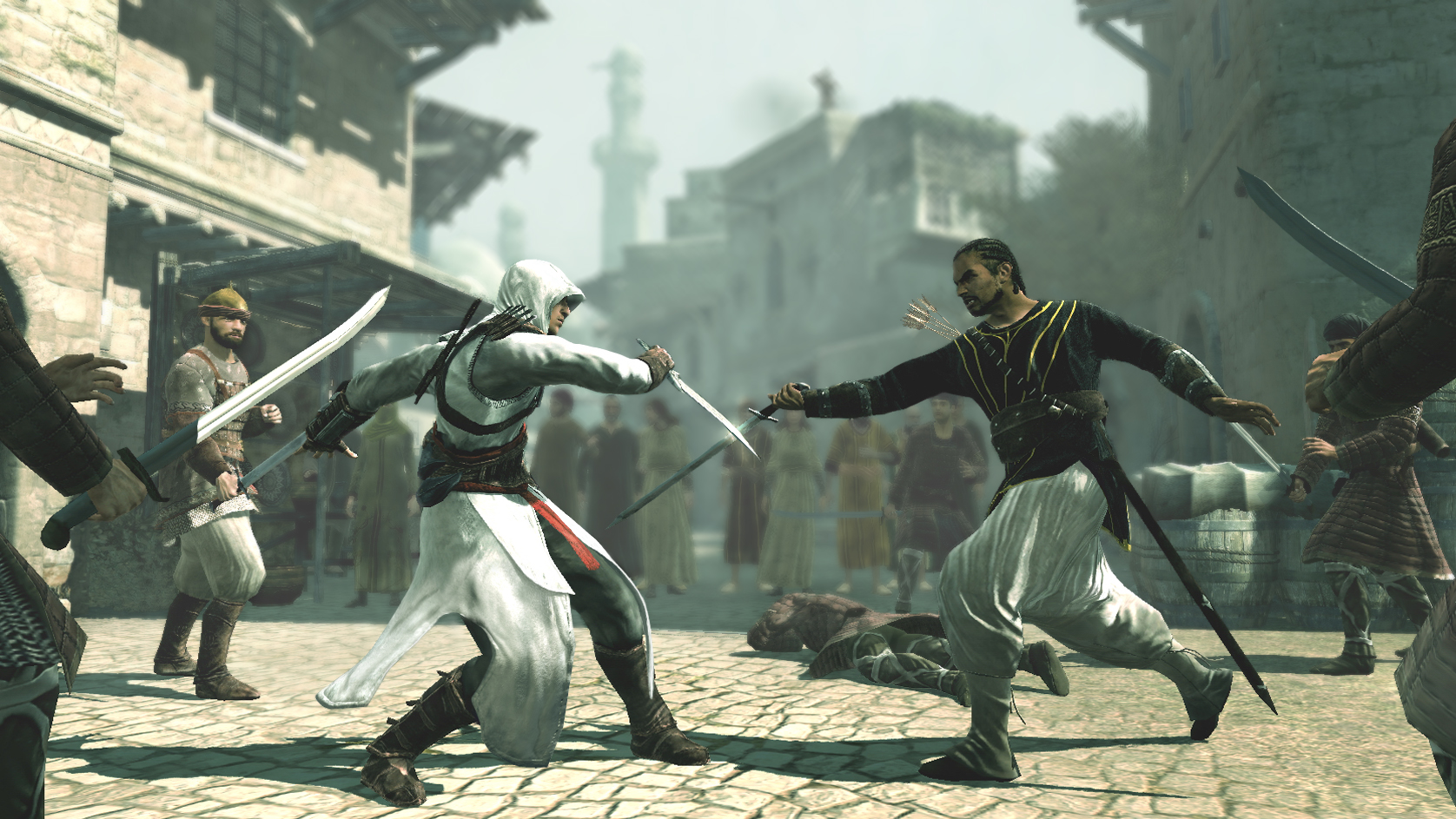
From the pay off-go, information technology's shocking to date an Assassin's Creed game where the protagonist is an unlikable dick. Ulterior entries lived and died by how favourite the player character was, and Altaïr is zip short of a bloody bad boy. Within minutes of knowing him, he stabs an innocent absinthe in the back, gets combined accomplice killed and the other dismembered, and mouths off to his elder like a odontiasis child. When one of Altaïr's fellow assassins chides him for an excess murder, expression "this is not the way," Altaïr responds with "my direction is advisable," which sounds the like a phrase you'd see on your 12-year- old first cousin's T-shirt.
Information technology doesn't help that Altaïr's voice actor could still land a Razzie by most moderne standards. For a game that starts off with the trademark disclaimer about the team up's multicultural makeup, auditory sense a distinctly North American nation voice come out of an antediluvian Syrian feels like a weird betrayal of that commitment. To embody fair, player Philip Shahbaz is Iranian-American, but little of that identity seems to survive in Altaïr's progression as a character, which unconvincingly transitions from sour grape to remorseful curmudgeon with all the grace of a short Templar.
Midway through and through his redemption, Altaïr's drawing card asks him how he knew helium wouldn't kill him as penalisation for piece of ass up. Altaïr's answer is simply, "I took a leap of faith". Weft. To its credit, the ultimate twist of Assassin's Creed's plot (Altaïr's mentor is corrupted by the mentation Malus pumila of Shangri-la, throwing the implied benevolence of the assassin sodality into disarray) massively pays forth throughout the rest of the series. We like to harp on Ubisoft for organism 'apolitical' with its storytelling, but the historical fiction of the Assassin vs Templar wars has provided for plenty of multilayered characters and motivations without it feeling like 'some sides' stupidity. Lettered the Brotherhood is fallible makes its victories and failures that much more meaningful.
Go with dishes
Bravo's Creed's strongest portions to this day remain the assassinations themselves. To undergo to them, though, you own to slog through a city's root missions, which include identical tasks like pickpocketing, beating up rabble-rousers in alleys, operating theater rooftop running time trials. That's it for variety, and the inclusion of hundreds of collectible flags doesn't help, but I did revalue that reconnaissance missions actually gave ME a small piece of intel that could, in possibility, play into my final assassination.
An early moment of investigation led me to discover that my target, a Templar sawbones in charge of a ward overfull of unsound people, often focuses on his patients to the detriment of his immediate milieu, making him an easier target. It's nowhere near the depth of more immersive games, look-alike stumbling upon some casual cannibalism in a Fallout 3 town, but it does render you a little more familiarity with your target. Not enough to feel anything terribly personal towards them, but that's where other part of Assassin's Creed comes in to play.
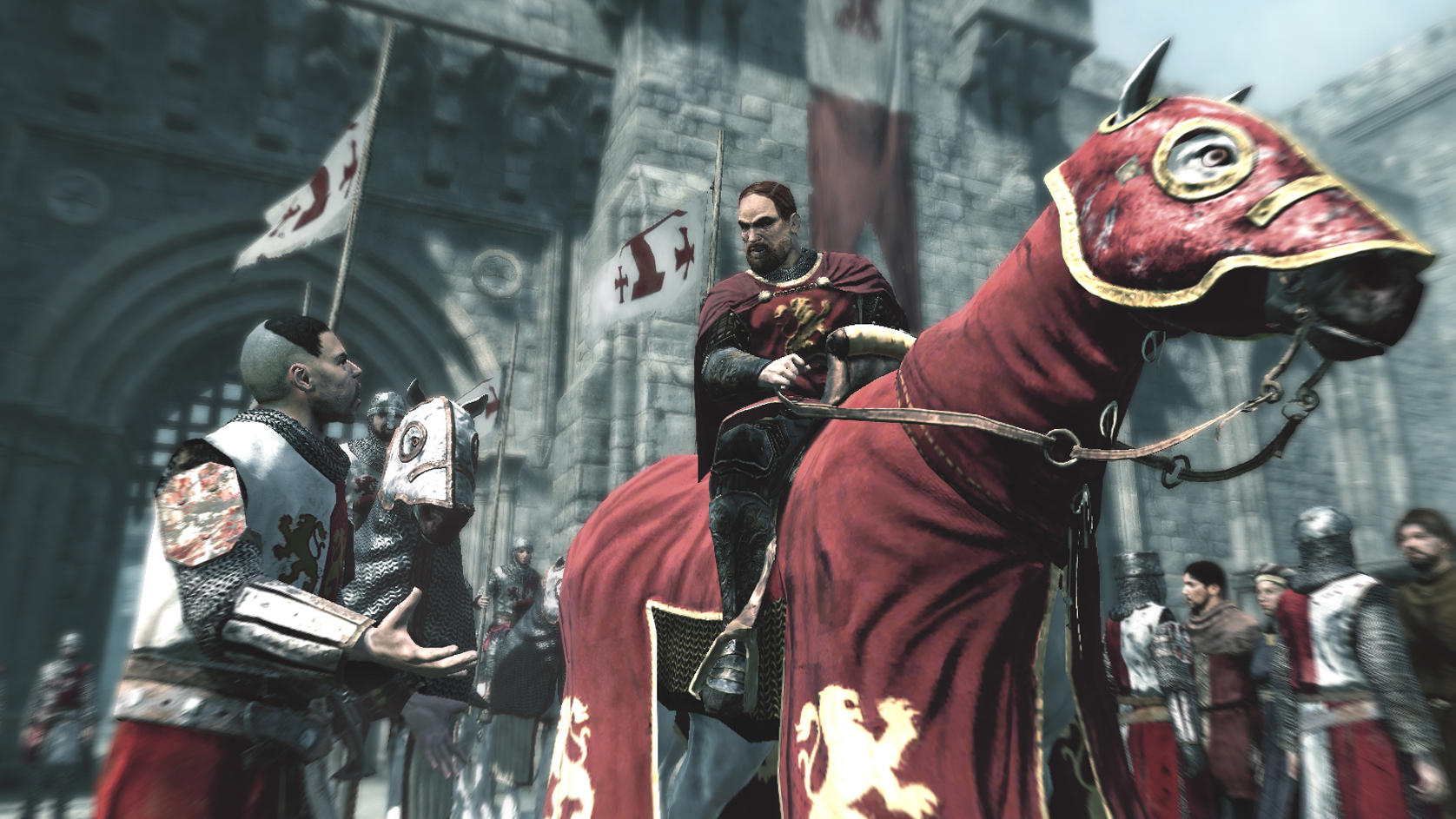
Though these days it feels like Ubisoft is more known for huge open worlds, IT's impossible to miss how Assassin's Creed influenced the arc of post-2007 storytelling. Each assassination mission kicks off with a medium presentation to your target even as you walk up, virtually ne'er ripping outside from your perspective. When Altaïr finally plunges the adept ol' wrist-blade into his plump for, players are treated to a kind of English-present conversation 'tween the two. To each one dupe gets their monologue, ripping into Altaïr with the bluster you'd expect of a villain, but too with the genuine brokenheartedness that he could non see the world the way they did.
Though future entries did it with more flair, information technology's striking that Assassin's Gospel was confident adequate in its storytelling to seed seeds of doubt in its player. But what is a narrative without a world to tell information technology in? It's crazy to think that Ubisoft believed it could get by with designing three major cities, an assassin hamlet and a considerable overworld connecting IT all.
City boy
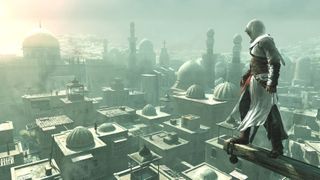
And you know, Ubisoft didn't get away with information technology. Despite Jerusalem, Damascus and Acre beingness very different regions, each city feels bereft of cultural signifiers besides one or deuce notable landmarks, like the Dome of the Stone in Jerusalem or the embrasure in Acre. Even worsened, each city was ostensibly built by the Lapp designer, apiece building a basic square or triangle every bit if shunted into place like a Lego set freeze rather than naturally layered over the years. This makes to each one place feel far too similar to the last.
I wonder excessively how confident Ubisoft was in its climb tech at the meter, considering Altaïr gets tripped by anything other than a 90-degree angle. There's nothing quite an the like leaping over three support beams, swingy through a merchant's stand with around immaculate animation, and eagle-diving into some hay.
Consider me still very impressed by the controls, where Ubisoft assigned each side of your body to your controller's face buttons. IT forces you to glucinium conscious of how you're using your body in the moment, be IT to shove a Man out of the way of life or sashay around his guard. Now, flatbottom Valhalla relies on a fairly standard brightness level and heavy attack organisation that entirely considers your body when it's time to two-fold-wield shields.
Then thither's the overworld that connects the cities, a large even surprisingly simple forward motion of huts and military camps bookmarked only by more towers to climb. Information technology's weird because information technology shows the scope of Ubisoft's ambition years before it would really nail it. I'd wager it was meant to put up so much more to do, but instead we just develop some innocuous horseback awheel.
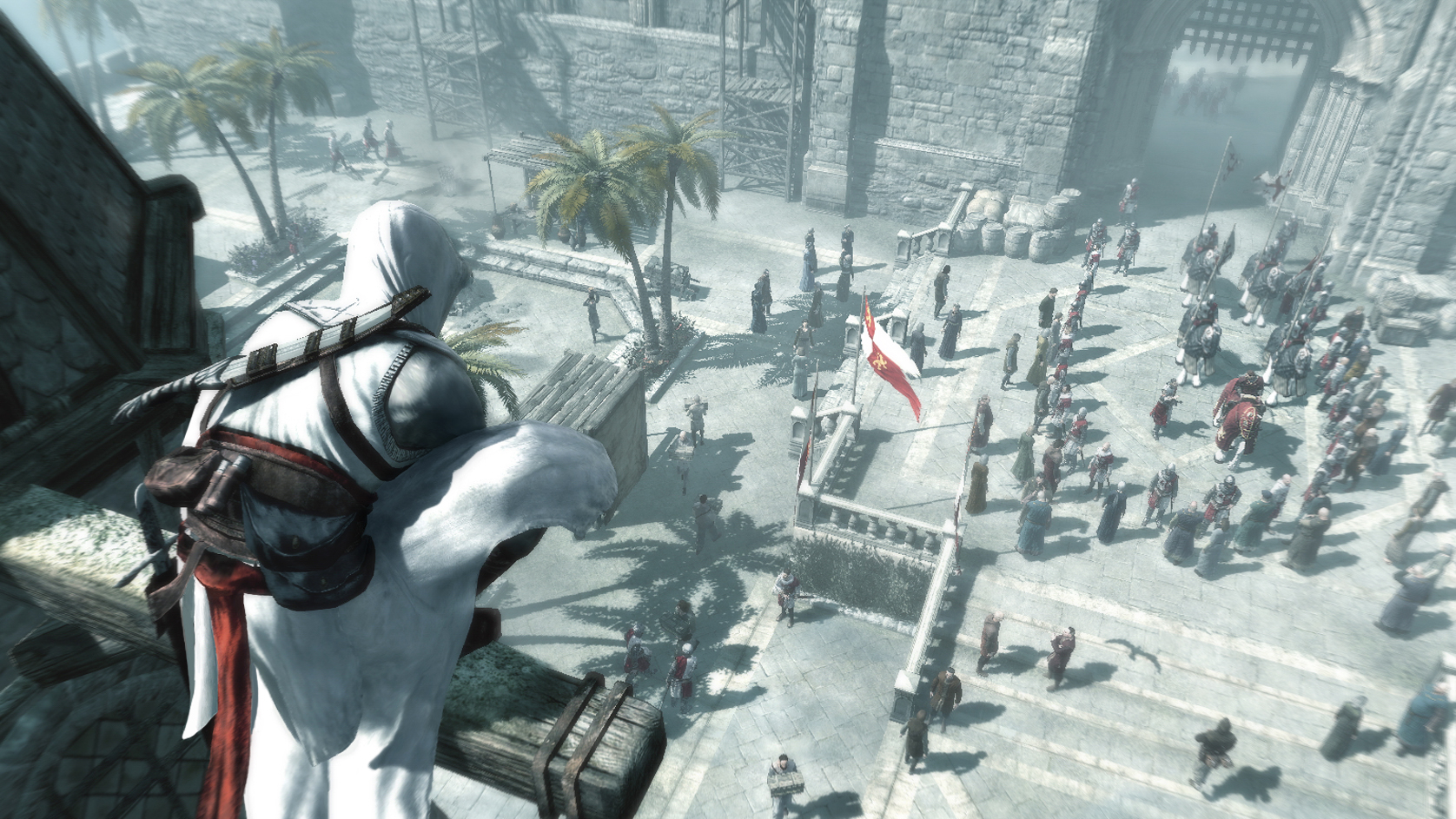
There's also a bi of NPCs that haven't mature well, including the homeless person people exhibiting signs of psychopathy who violently thrust you, Beaver State the small army of beggars that always happen to be women. To Ubisoft's credit, the cast is well-rounded with (mostly virile) actors representative of to each one region.
I realise I've spent much of this ragging on Assassin's Creed, but it's easy to see wherefore this franchise took off the way it did, save for a few resets. Hitman was already on the scene as a sort of social stealing experience, but Assassin's Church doctrine was unfeignedly a next-gen horsepower showcase, and it wasn't afraid to show that polish off. The camera is closer to the role player, much intimate, and not such the regular third person of Recent tries. The pacing is nowhere nearby the breakneck speed of Valhalla, but to check Middle Eastern cities realised so expansively was groundbreaking for the time.
Assassin's Creed is a testament to Ubisoft's strengths A a studio, where scope was just a word and all gamer's natural inherent aptitude for historical murder tourism can be explored with some genuine zeal. Altaïr English hawthorn comprise a fumbling mess at many times, but he walked so we could running.

Source: https://www.pcgamer.com/the-original-assassins-creed-was-an-awkward-ambitious-sign-of-things-to-come/
Posted by: williamsthisere.blogspot.com
0 Response to "The original Assassin's Creed was an awkward, ambitious sign of things to come | PC Gamer - williamsthisere"
Post a Comment